February 2
Dísablót / Disting
A late-winter observance honoring the dísir — the female ancestral and protective spirits tied to family, fate, and the home. Often seen as a marker between winter's depth and the first signs of spring.
Free Shipping to the US · Free Worldwide Shipping on Orders Over $100
The Turning of the Year
The old Norse year was shaped by the land — by winter darkness, returning light, planting, harvest, and the long turning of the seasons. This page gathers seven seasonal markers inspired by Norse tradition and modern old ways practice. Some are rooted in historical sources; others are kept today as meaningful seasonal observances. Use it as a guide to the rhythm of the year, not as a fixed rulebook.
Next Norse Holiday
October 31
A quiet, household observance in late autumn, connected with the álfar and family memory. It was a private affair — not a public feast — and centered on the bonds between the living and the dead.
SEASONAL FEATURE
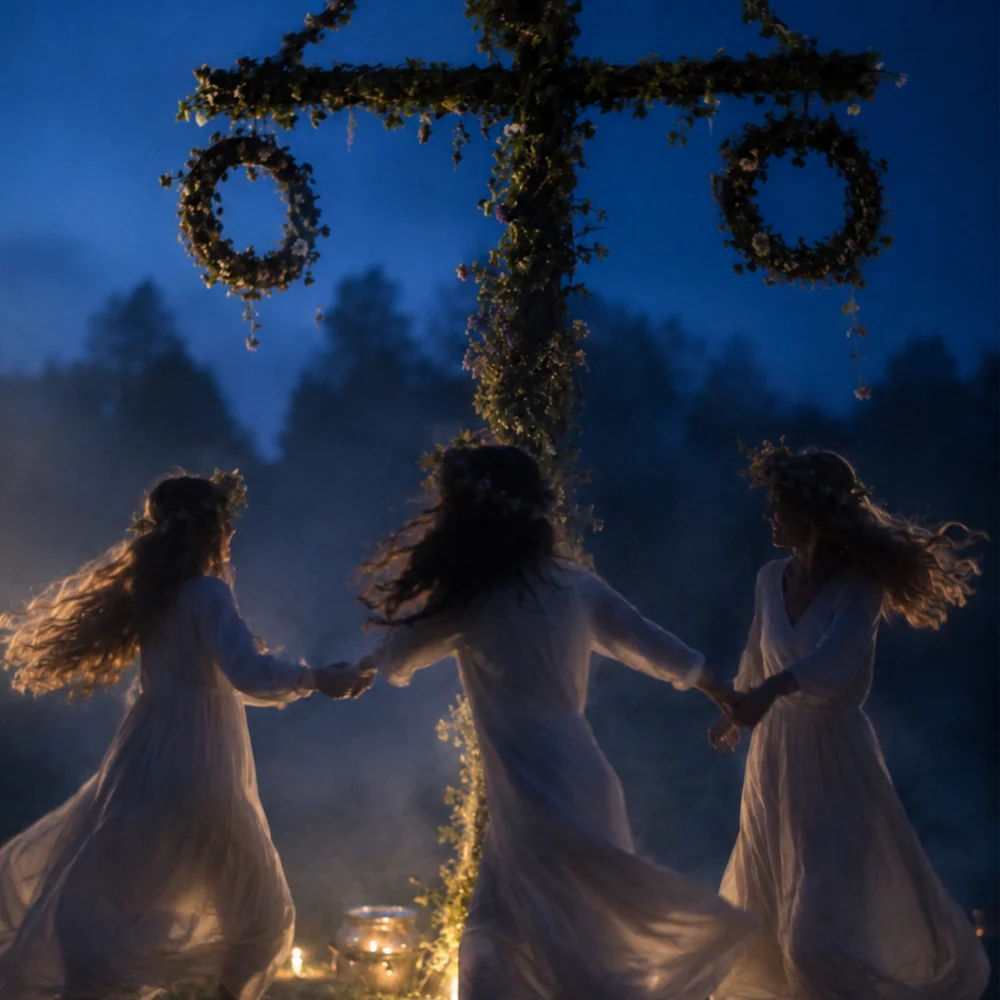
Long light, birch forests, flowers gathered at the longest day — one of the clearest markers in the Northern year.
Seasonal Observances
Seven markers across the year. A few come straight from historical sources; others are modern reconstructions kept by people who still mark the seasons. Practice varied by place and period — use these as a starting point, not a fixed rulebook.
February 2
A late-winter observance honoring the dísir — the female ancestral and protective spirits tied to family, fate, and the home. Often seen as a marker between winter's depth and the first signs of spring.
April 15
The opening of the summer half-year. A time of gathering strength, beginning new work, and looking ahead to the long days of light.
June 21
The height of summer. In modern practice this is often linked to the solstice, but older Norse calendars sometimes placed it later in July. Either way, it marks the year's brightest point.
September 22
A marker for the time of gathering, storing, and giving thanks. The fields are in, the work is nearly done, and the dark half of the year draws closer.
October 15
The turn toward winter. A time of protection, remembering those who came before, and preparing home and hearth for the long dark.
October 31
A quiet, household observance in late autumn, connected with the álfar and family memory. It was a private affair — not a public feast — and centered on the bonds between the living and the dead.
December 21
Midwinter. A time of kinship, firelight, and the slow return of the sun. The length and exact timing of Yule varied by region and source, but the meaning was the same: getting through the dark together.
Note on Dates
The dates shown are modern reference points used by Runestone Norway. Historical Norse observances were seasonal, regional, or tied to the moon, and they shifted by place and period. Treat this as a practical guide, not a claim of historical certainty.
Go Deeper
Read about the Elder Futhark, individual rune meanings, and the symbols that run through the Northern year. Visit the Norse Calendar Hall for seasonal field notes, or try the Rune Name Converter.
Browse the Rune LibrarySeasonal Invitation
Browse Norse-inspired pieces for the season, or join the Rune Circle for rune meanings, short seasonal notes, and the occasional letter from Runestone Norway.
The Shop
Apparel, jewelry, home pieces, mugs, journals, and rune guides — designed in Norway for people who care about Norse symbols, heritage, and the old ways.
Warm layers for the cold half of the year.
Shop →Everyday Norse designs built on symbols and story.
Shop →Seasonal pieces with Viking-inspired artwork.
Shop →Norse headwear for winter, travel, and daily use.
Shop →Tote bags with Norse symbols and old ways designs.
Shop →Mugs for morning coffee, hearthside evenings, and Nordic homes.
Shop →Journals for runes, notes, reflection, and everyday life.
Shop →Norse jewelry inspired by protection, heritage, and meaning.
Shop →Digital rune guides, symbols, and printable learning tools.
Shop →Nordic wall art and home pieces rooted in runes, protection, and ancestry.
Shop →