ᚱ · The Rune Library
The Rune Library
Norse Runes & Rune Meanings
A growing archive of rune meanings, Elder Futhark guides, Norse symbols and meanings, protection symbols, Norse mythology, Viking heritage, seasonal observances, and the old ways.
Created by Runestone Norway · Designed in Norway
ᚦ · A quiet archive
Walk in.
Take your time.
The Rune Library is not a feed. It is a slow room — built for those who want to understand the meaning behind the symbols, runes, Viking heritage, stories, and seasonal traditions of the North. Here we gather rune meanings, Norse symbol guides, old stories, and practical notes on carrying the old ways into modern life.
ᚨ · The Archive
Eight halls of Norse knowledge.
Each hall is a doorway into rune meanings, the rune alphabet, Norse symbols, protection, mythology, Viking heritage, seasonal observances, guides, rituals, and the old ways. New writings and field notes arrive with the seasons.
Rune Meanings
Elder Futhark, rune by rune — meaning, history and use.
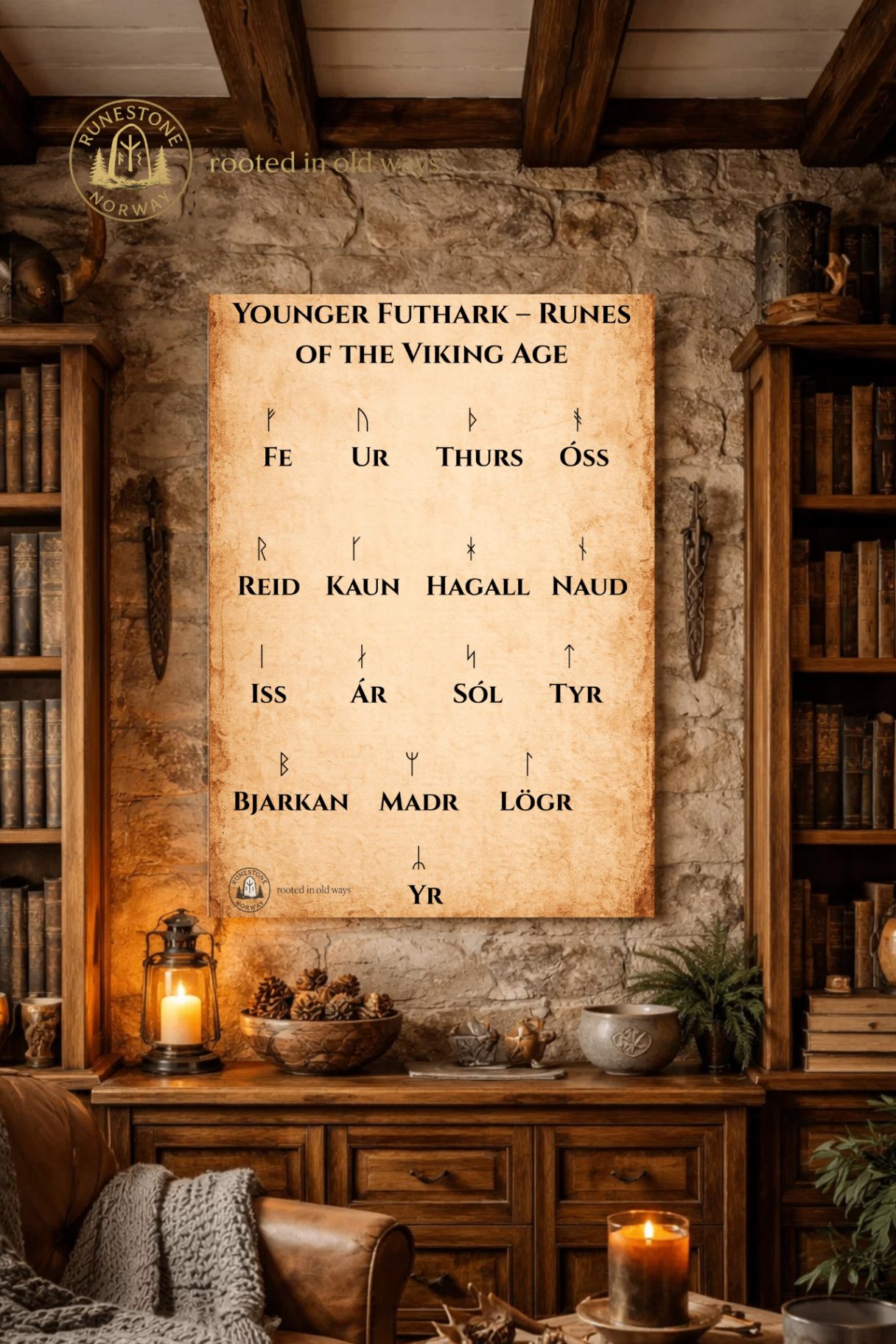
Rune Alphabet
The full runic alphabets of the North and how they were written.
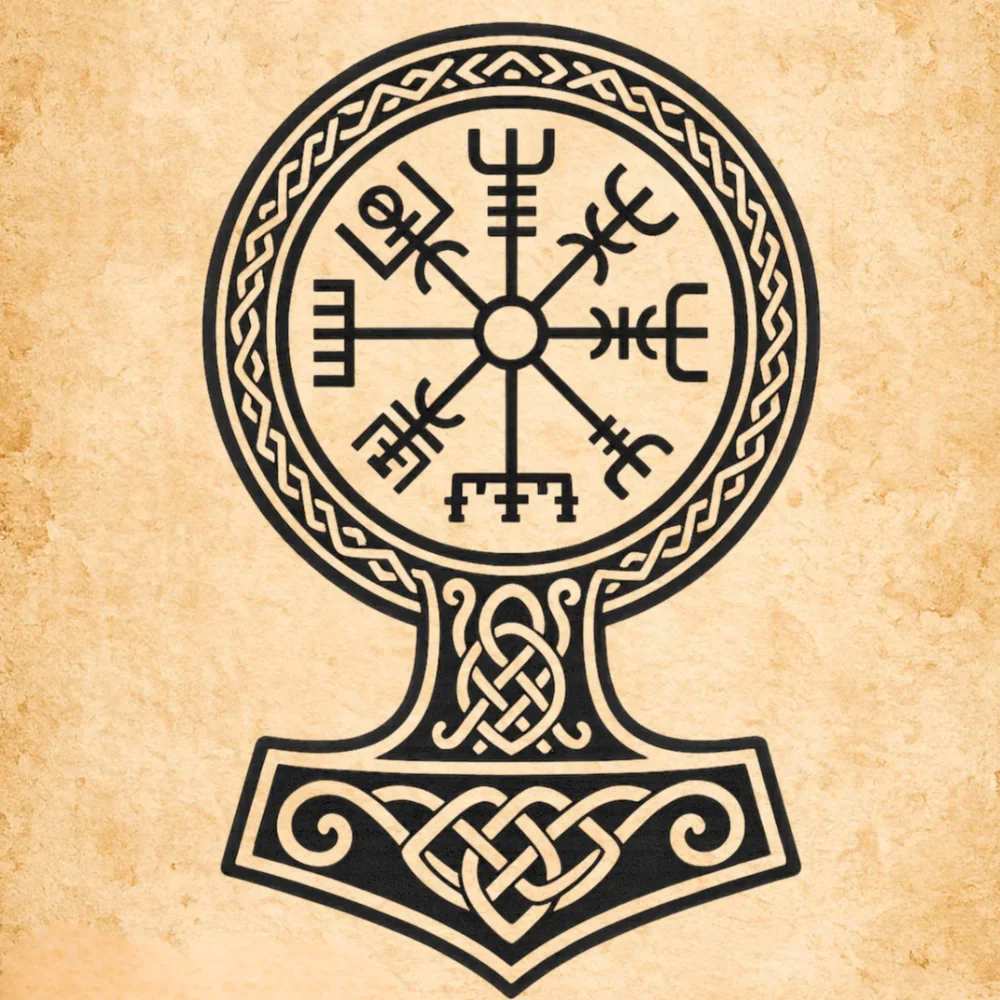
Norse Symbols
Vegvisir, Valknut, Yggdrasil and the marks of the old North.
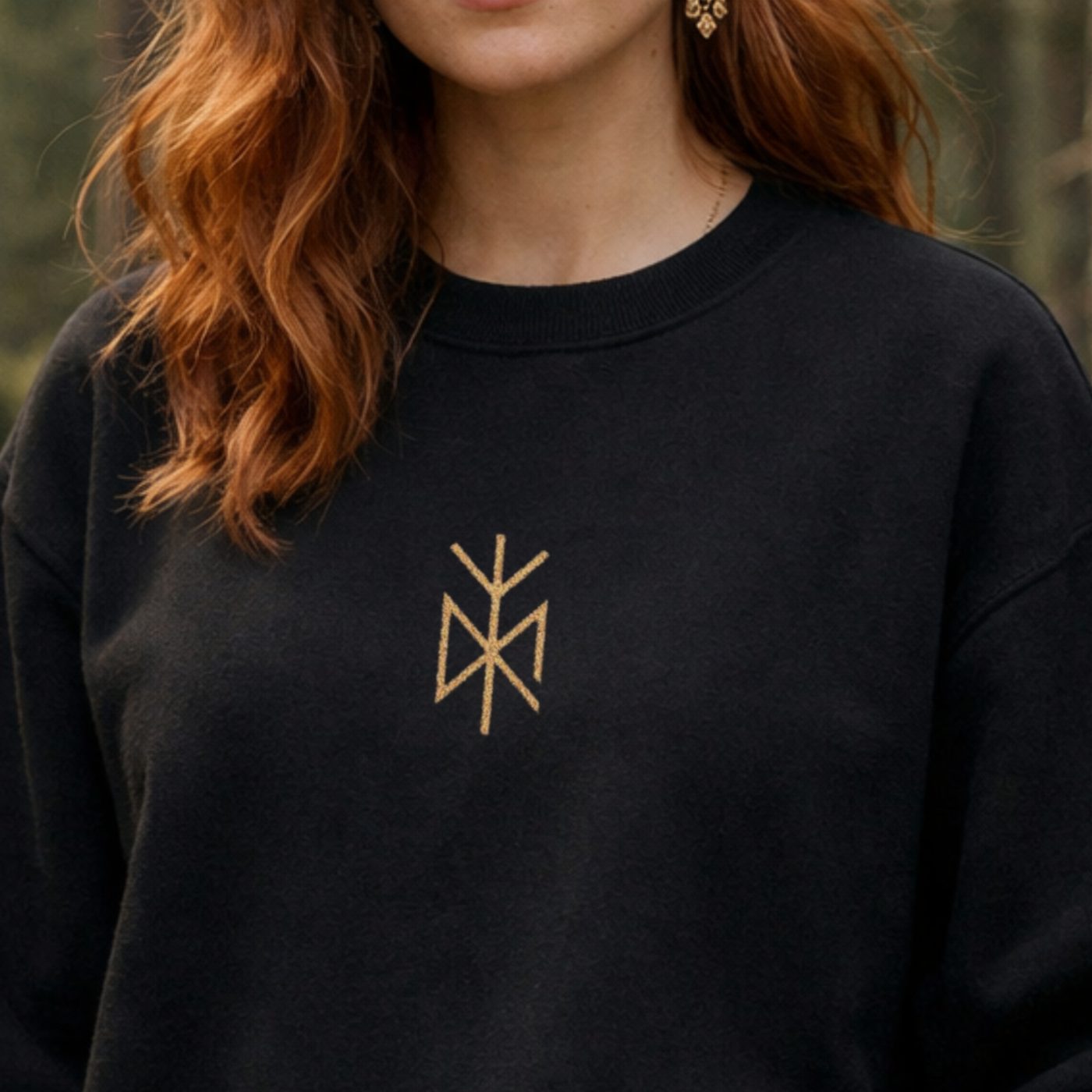
Protection Symbols
Aegishjalmur, the Helm of Awe and the symbols carved for safekeeping.
Norse Gods & Mythology
Odin, the Norns, the nine worlds and the long sagas.
Norse Calendar
Seasons, blots and the old Norse year as it was lived.
Guides & Rituals
Quiet practices, old ways and grounded guides for modern life.
The Old Ways
Forest, fjord and hearth — how the North still lives the old ways.
ᛚ · Featured Guides
Start with these Rune Library guides.
Hand-picked entry points into runes, Norse symbols and mythology — a good first walk through the archive.
Norse Symbols
Vegvisir Meaning
The Icelandic wayfinder stave — origins, symbolism and what it actually was.
Rune Alphabet
The Elder Futhark
A grounded guide to the 24 runes of the oldest Norse alphabet.
Norse Symbols
Helm of Awe (Aegishjalmur)
The stave warriors painted between the brows — defence, fear and the grimoires.
Norse Mythology
Thor in Norse Mythology
Protector of Midgard, friend of farmers, slayer of giants — Thor as the Eddas tell him.
Guides & Rituals
Viking Names
Old Norse naming traditions — meanings, patronymics and names still in use today.
Norse Symbols
Valknut Meaning
Three interlocking triangles linked to Odin and the slain — meaning, use and history.
Norse Symbols
Mjolnir: The Real Meaning of Thor's Hammer
The hammer of Thor — origins, symbolism and the warrior tradition behind the world's most recognised Norse symbol.
Norse Mythology
Odin: The Allfather of Norse Mythology
Warrior, poet, wanderer and king of the gods. A grounded guide to Odin as the Norse sources actually describe him.
Rune Meanings
Fehu Rune Meaning
The first rune of the Elder Futhark — cattle, wealth, flow and the energy of new beginnings.
Rune Alphabet
Rune Meanings: Complete Elder Futhark Guide
A full reference to all 24 runes of the Elder Futhark — names, meanings, associations and how they were used.
Norse Mythology
Tyr: The Norse God of Justice
The one-handed god who bound Fenrir — Tyr's story, his rune, and what justice meant in the old Norse world.
The Old Ways
Norse Paganism & Heathenry
What is Norse paganism in the modern world? A clear, honest look at Heathenry, its practices and its roots.
Seasonal Lore
Norse Midsummer: Meaning & Traditions
The summer solstice in the Norse world — what Midsummer meant, how it was celebrated, and the traditions still alive today.
Seasonal Lore
How to Celebrate Midsummer the Norse Way
Practical guides to carrying Midsummer traditions into modern life — bonfires, offerings, feasting and seasonal ritual.
Norse Mythology
Yggdrasil: The World Tree and the Nine Realms
The great ash at the centre of the Norse cosmos — its roots, its realms, and the beings who dwell among them.
Rune Meanings
Algiz Rune Meaning: The Symbol of Protection
The Elder Futhark rune of defence and sanctuary — its shape, its history, and how it was used as a ward.
RUNE TOOL
Write Your Name in Runes.
A free Elder Futhark rune name converter. Type your name and see a simple rune-inspired spelling with a letter-by-letter breakdown.
ᚾ · Rune Name Converter
See your name written in Elder Futhark runes
This simple rune name converter takes any name and maps each letter to its closest Elder Futhark equivalent. Learn the rune names and meanings behind each symbol as you spell your name in the old alphabet of the North.
A fun, educational tool for anyone curious about runes, Viking heritage, and how the Elder Futhark alphabet works.
ᛟ · Example
R U N E
Raido · Uruz · Naudiz · Eihwaz
ᛞ · Readings
Field notes from the North.
Long-form guides on runes, symbols and Scandinavian living — written with the care of a craftsman and the patience of a winter.

ᚠ · Featured · Norse Mythology
Viking Santa? The Real Norse Folklore Behind a Popular Christmas Theory
A long white beard. A wide-brimmed hat. A flying, otherworldly steed that carries him across the sky in a single night. A theory that's been circulating for years claims Santa Clau…

Norse Folklore
The Yule Lads: Iceland's 13 Norse Christmas Trolls (and Their Troll Mother Grýla)
Iceland has its own Santa Claus problem — except instead of one jolly figure, it has thirteen, and they used to be genuinely frightening. The Yule Lads are a set of trickster broth…
September 17, 2026

Guides
Norse Yule Ornaments: The Meaning Behind Vegvisir, Mjolnir, and Yggdrasil
A Christmas tree covered in the same symbols the Vikings carried for protection, guidance, and memory is a different kind of holiday decoration than a box of generic baubles. Runes…
September 16, 2026

Norse Creatures
Sleipnir: Odin's Eight-Legged Horse and Why He's the Greatest Steed
Sleipnir is Odin's horse, and he has eight legs. That single detail is usually the hook that pulls people into his story — but the story itself is stranger than the detail. Sleipni…

Gift Guide
A Viking Christmas Gift Guide: Norse-Inspired Presents for Everyone on Your List
Buying a Norse-inspired Christmas gift for someone can go wrong two ways — too generic to mean anything, or so deep into mythology that only the recipient's most obsessive friend w…

norse-mythology
How Eric Bloodaxe Died: The Battle of Stainmore, 954
In 954, on a stretch of high, empty moorland called Stainmore — on the old boundary between Northumbria and the rest of England, in what is now Cumbria — Eric Bloodaxe died in batt…

norse-mythology
Eric Bloodaxe's Sons: The Dynasty That Outlived Stainmore
Eric Bloodaxe died at Stainmore in 954. That was not the end of his line — it was closer to the beginning of its second act. Gunnhild gathered their sons, left England, and spent t…

norse-mythology
Was Eric Bloodaxe Real? What the Historical Record Actually Shows
Yes — Eric Bloodaxe was a real person, and a real king. That's the short answer. The longer, more interesting answer is that the Eric Bloodaxe most people are about to meet on scre…

norse-mythology
Eric Bloodaxe's Silver Penny: The Coins That Prove a King
For a king whose life mostly survives through hostile chronicles and sagas written centuries after his death, the most trustworthy witness to Eric Bloodaxe's reign isn't a story at…

Viking Culture
What Did Vikings Actually Eat? Real Viking Food Explained
The image of Vikings feasting on enormous hunks of meat and drinking mead from horns is not entirely wrong — but it's also only part of the picture, and probably not the everyday p…

Norse Women
What Norse Women Actually Wore: Viking Clothing for Women Explained
When we picture Viking-age clothing, we tend to picture men. Warriors, travellers, traders. But Norse women had their own rich material culture, and the archaeology of their dress …

Creation Myths
Ymir: The First Giant and the Origin of the Norse World
In the beginning, there was ice and fire. Two primordial worlds — Niflheim, the realm of frost and mist, and Muspelheim, the realm of fire — existed before anything else. Between t…

Afterlife
Hel: The Norse Goddess Who Rules the Dead
Hel is one of the most misunderstood figures in Norse mythology. Because she shares a name with the Christian place of punishment — and because the Christian hell is, in part, etym…

Reading
Birth Rune Gifts: How to Give Someone Their Rune
There is a version of personalised gifting that is just putting someone’s name on a thing, and then there is a version that actually means something. A birth rune gift is the secon…

Reading
What to Do With Your Birth Rune Once You've Found It
You’ve used the calculator, you know your rune. Maybe it resonated immediately and you’re already reading everything you can find about it. Maybe you’re looking at it a bit sideway…

Reading
Norse Zodiac vs Birth Runes: Are They the Same Thing?
There is no Norse zodiac. This is probably not what you wanted to hear, but it’s worth saying clearly before we get into what does exist, because the two things are genuinely diffe…

Reading
Norse Altar Tools and Objects: What Each One Means and Why It's There
The first guide covered how to set up a Norse altar — the basics of choosing a space, orienting it, and beginning. This one goes deeper into the objects themselves: what each thing…

Reading
Loki's Web: His Children, His Lovers, and the Family Built for Ragnarök
No family in Norse mythology is more consequential than Loki's. His children include a wolf who will swallow Odin, a serpent who will poison Thor, a goddess who rules the dead, and…

Reading
Jörmungandr: The World Serpent Who Holds Everything Together
There is a serpent beneath the ocean that encircles the entire world. Its body is so vast that it can reach its own tail in its mouth, and it has been holding that position since t…

Reading
What Erik Bloodaxe Wore, Carried and Drank From: Material Life in the 10th Century
Objects tell you things stories can't. The cup in a king's hand, the cloak fastened at a queen's shoulder, the ring on a warrior's arm — these were real things, made by real crafts…

Reading
Norse Queen Energy: What Power Actually Looked Like for Women in the Viking Age
“Norse queen energy” has become shorthand for something — a kind of fierce, self-possessed authority that people recognize even without being able to fully define it. But what did …

Reading
Gunnhild's Magic: The Sorceress Who Went North to Learn from the Sámi
Before she was queen, before she was wife to Erik Bloodaxe, before she became the most hated woman in the Icelandic sagas, Gunnhild went north. She went to Finnmark — the deep nort…

Norse Cosmology
Jotunn: Who Are the Giants of Norse Mythology?
The jötunn are the giants of Norse mythology — and if you're picturing massive humanoid creatures stomping around causing trouble for the gods, you have the right general idea, but…

Norse Gods
Iðunn and the Golden Apples of Immortality
The Norse gods are not immortal in the way that, say, the Greek Olympians are. They age. They can be wounded. They can die — and at Ragnarök, most of them do. What keeps them young…

Reading
Gunnhild, Mother of Kings: The Woman Who Outlived Everyone
She is called Gunnhild konungamóðir — Gunnhild, mother of kings. It is the title she earned not through marriage but through survival. Her husband Erik Bloodaxe died at Stainmore i…

Reading
Norse Gifts for Viking History Lovers: A Gift Guide Grounded in the Real History
Someone in your life has gone down the Wikipedia rabbit hole on Erik Bloodaxe and Gunnhild and hasn't fully come back up — maybe sparked by a new Viking series, maybe by a document…

Famous Vikings
Famous Vikings in History: The Real People Behind the Legends
Pop culture has given us a version of the Vikings that is part truth, part saga, and part 19th-century romanticism. Ragnar Lothbrok wasn't a single historical person. Lagertha may …

Norse Creatures
Níðhöggr: The Dragon Gnawing at the Roots of Yggdrasil
At the bottom of everything — beneath Yggdrasil , the world tree that holds all nine realms together, deep in the misty cold of Niflheim — something gnaws. It has been gnawing sin…

Norse History
The Völva: Norse Mythology's Most Powerful Female Role
In the Norse world, there was a category of woman who stood outside the normal social order — who travelled alone, who was fed and housed and listened to by chieftains and kings, w…

Norse Gods
Freyr: Norse God of Fertility, Wealth and the Sun
Freyr is one of the most important gods in the Norse pantheon, and one of the least understood in modern popular culture. While Odin and Thor dominate film and television adapt…

Norse Creatures
Norse Mythology Creatures: The Complete Guide to Every Beast
Norse mythology is populated by an extraordinary range of beings. Beyond the gods and the giants, beyond the elves and the dwarves, there are creatures of every shape and dispositi…

Norse Cosmology
Asgard: The Realm of the Norse Gods Explained
In the Norse cosmos, the gods do not live in a cloud or in an abstract divine realm. They live in a place — a real, physical place with walls and halls and streets and fields, buil…

Norse Symbols
Norse Tattoo Guide: What to Know Before You Get Viking Ink
Viking tattoos are everywhere. Walk into any tattoo studio and you'll see Norse symbols on the flash wall: Vegvisir compasses, Valknut knots, Helm of Awe hexagons, Mjolnir hammers.…

Norse History
Viking Weapons: What Warriors Actually Carried into Battle
When most people picture a Viking warrior, they picture a horned helmet and a massive axe. The horned helmet is a myth — a 19th-century invention with no basis in Norse archaeology…

Norse Music
AI Viking Music Is Taking Over TikTok and Spotify — Here's Why It's Everywhere
Something strange is happening on Spotify. A band called Ravnlore has published 12 full-length albums in 2026 alone — including three in a single three-day window. Their Facebook p…

gungnir
Gungnir: The Meaning of Odin's Spear in Norse Mythology
Every story about Gungnir tells you something about Odin . A hammer breaks things open. A sword cuts cleanly through. But a spear is thrown — cast outward from the one who holds i…

Reading
Ratatoskr: The Gossiping Squirrel at the Heart of the Norse World
Among all the creatures in Norse mythology — the world-encircling serpent, the eight-legged horse, the wolves who chase the sun and moon — there is one that gets overlooked more th…

aesir gods
Baldur: The Shining God of Norse Mythology Explained
Every pantheon has a figure of perfect light — the one who is too good, too beautiful, too beloved to survive for long. In Norse mythology, that figure is Baldur. Son of Odin and F…

Reading
Draugr: The Viking Undead Who Haunted Norse Graves
The Norse were not afraid of death. They had made their peace with it — organised it carefully into Valhalla and Helheim and Fólkvangr, turned it into something comprehensible. Dyi…

Reading
Valknut: The Meaning Behind Norse Mythology's Most Mysterious Symbol
Three interlocking triangles. No clear beginning, no clear end. The valknut is one of the most instantly recognisable symbols from Norse mythology — and also one of the least under…

ancestral wisdom
Othala — The Twenty-Fourth Rune: Heritage, Home, and What Flows Through the Blood
The last rune of the Elder Futhark belongs to something the Norse understood with absolute clarity: that who you are is partly inherited. That the land your ancestors worked, the s…

bind runes
Bind Runes for Strength and Success: Which Runes to Combine and Why
Some situations ask for more than hope. A bind rune for strength and success draws on the specific runic energies of will, endurance, directed force and breakthrough — combining them into something you carry into the work. This is a guide to the runes and combinations that actually deliver.

Reading
Huginn and Muninn: Odin's Ravens and What They Really Mean
Every morning, before the rest of Asgard stirs, Odin sends them out. Two ravens, launched from his shoulders into the dark. They fly across all the nine worlds — over Midgard where…

dagaz
Dagaz — The Twenty-Third Rune: Dawn, Breakthrough, and the Threshold Between
There is a moment just before dawn when the world hangs between what it was and what it's about to become. The darkness is still there, but it has already been interrupted. The lig…

Reading
Surtr: The Fire Giant Who Will Burn the World at Ragnarök
Before the gods. Before Yggdrasil grew its first branch. Before the first frost giant or the first human or the first rune was carved into wood — there was fire. Burning in a place…

elder futhark
Ingwaz — The Twenty-Second Rune: Freyr, Inner Completion, and the Stored Seed
Some runes announce themselves boldly — their energy is outward, active, visible. Ingwaz is not one of those runes. It is quiet, complete, interior. It is the seed before the plant…

elder futhark
Laguz — The Twenty-First Rune: Water, Intuition, and the Depths Beneath
Water finds its own way. It doesn't force a path — it follows the contours of the land, moving around obstacles, wearing them down over time, filling every space it enters. That qu…

Reading
Web of Wyrd: The Norse Symbol of Fate Explained
If you have come across the Web of Wyrd — that nine-pointed grid that looks like overlapping rune staves — you might have noticed that it appears everywhere in Norse-inspired desig…

bind runes
Bind Runes for Love and Connection: Which Runes to Combine and Why
Love bind runes are among the oldest uses of runic combination — but they work best when you understand what kind of love you are actually asking for. This guide covers the runes associated with love, connection and relationship, and how to combine them with honesty and intention.

Reading
Fenrir Tattoo Meaning: The Wolf as a Warning, Not Just a Monster
If you are looking for a Fenrir tattoo, you have probably already seen the images: massive wolf, shattered chains, open jaws. The designs are dramatic and undeniably striking. But …

Reading
Ehwaz — The Nineteenth Rune: The Horse, the Bond, and the Language Between
Rune: Ehwaz — Elder Futhark position: 19 — Sound value: E The Horse in Norse Culture To understand Ehwaz, you first need to understand what the horse meant in the Norse world — a…

Reading
Mannaz — The Twentieth Rune: What It Actually Means to Be Human
Rune: Mannaz — Elder Futhark position: 20 — Sound value: M The Rune of the Human Mannaz is named for mann — man, human, person. It is the rune of humanity itself: what we are, wh…

Reading
Berkano — The Eighteenth Rune: The Birch, the Birth, and What Grows After Sacrifice
Rune: Berkano — Elder Futhark position: 18 — Sound value: B The Pioneer Tree After fire. After the glacier retreats. After the land has been stripped bare by whatever force came …

Reading
Your Birth Rune and What It Means: All 24 Half-Months
Once you know your birth rune, the natural next question is: what does it actually mean? This is the reference you need. All twenty-four runes, their approximate date ranges, and w…

Reading
Tiwaz — The Seventeenth Rune: Tyr, the One-Handed God, and the Price of Justice
Rune: Tíwaz — Elder Futhark position: 17 — Sound value: T The Arrow That Points North Tíwaz looks like an upward-pointing arrow, and that shape is not accidental. The rune is nam…

Reading
Viking Birth Month Symbols: Why Your Birth Rune Probably Isn't What You Think
If you searched for something like “Viking birth month symbol” or “Norse rune for my birth month,” you probably had a specific expectation: one symbol per month, twelve in total, s…

Reading
What Is a Birth Rune? The Norse Half-Month System Explained
There is a version of this question that has a clean, simple answer, and a version that has a more complicated one. We will give you both. The clean version: a birth rune is the E…

Reading
Sowilo — The Sixteenth Rune: The Sun, Victory, and the Wheel That Never Stops
Rune: Sowilo — Elder Futhark position: 16 — Sound value: S The Rune of the Sun Sowilo is the sun. Not a symbol of the sun, not a metaphor — in the Norse runic tradition, this run…

Reading
Sköll and Hati: The Wolves Who Chase the Sun and Moon
Every morning the sun rises in the east and drives hard across the sky. Every night the moon follows. And in the Norse understanding of the world, neither of them is moving because…

Reading
Algiz — The Fifteenth Rune: Protection, Reach, and the Edge Between Worlds
Rune: Algiz — Elder Futhark position: 15 — Sound value: Z The Shape of Reaching The first thing most people notice about Algiz is the shape. It looks like a hand raised toward th…

eihwaz
Eihwaz — The Thirteenth Rune: Meaning, History and Practice
Eihwaz is the rune of the yew tree — the oldest living thing in the Norse world, simultaneously poisonous and protective, associated with death and with endurance beyond death. As the thirteenth rune and the central axis of the Elder Futhark, Eihwaz holds the whole system together from the inside.

elder futhark
Perthro — The Fourteenth Rune: Meaning, History and Practice
Perthro is the most mysterious rune in the Elder Futhark — the one whose meaning scholars still debate, whose rune poem offers more riddle than answer. It is the rune of the lot cup, of fate being cast, of the hidden becoming revealed. And the mystery, it turns out, is the point.

Reading
Vegvisir Tattoo Meaning: What to Know Before You Get It Inked
Every year, thousands of people walk into tattoo studios with a reference image of the Vegvisir. It is one of the most requested Norse symbols in the world — recognisable, symmetri…

Reading
Berserker: What the Word Actually Meant in the Viking Age
The word has made it into everyday language. We use it casually — someone goes berserk in traffic, a sale has people going berserk, a player absolutely loses it on the field. We me…

cycles
Jera — The Twelfth Rune: Meaning, History and Practice
Jera is the rune of the harvest — of cycles completed, of patience rewarded, of the year turning as it always turns. The twelfth rune of the Elder Futhark arrives after ice and stillness to remind you that seasons change, that what you planted has been growing quietly all along, and that right timing is its own kind of power.

elder futhark
Isa — The Eleventh Rune: Meaning, History and Practice
Isa is the rune of ice — the stillness that stops everything, the frozen moment, the halt that cannot be argued with. The eleventh rune of the Elder Futhark is also the simplest: a single vertical line. Sometimes the most powerful thing is the one that does the least.

archaeology
3,000 Viking Coins Found in Norway — The Treasure That Tells the End of an Age
Metal detectorists in eastern Norway have uncovered the largest Viking Age coin hoard ever found in the country — over 3,000 silver coins, buried around 1050 AD at the very end of the Viking Age. The coins look almost newly minted. The story they tell is extraordinary.

archaeology
The Viking Textile Factory Just Found in Denmark — And What It Says About How Vikings Really Lived
Archaeologists in Denmark have just uncovered a 100,000 square metre Viking Age textile production site near Aarhus — over 80 pit houses, spindle whorls, looms, silver coins and glass beads. It is one of the most significant Viking discoveries in years, and it completely changes the picture of what a Viking settlement could look like.

elder futhark
Naudhiz — The Tenth Rune: Meaning, History and Practice
Naudhiz is the rune of need — not want, not desire, but genuine necessity. The tenth rune of the Elder Futhark is about the fire lit from friction in desperate times, the constraint that forces you to find what you actually have inside you, and what it means to need something badly enough to discover you can do it.

elder futhark
Hagalaz — The Ninth Rune: Meaning, History and Practice
Hagalaz is the rune of hail — the storm that comes from nowhere, destroys what you built, and cannot be reasoned with. The ninth rune of the Elder Futhark opens the second aett and marks the moment the sequence stops being about building and starts being honest about disruption.

elder futhark
Wunjo — The Eighth Rune: Meaning, History and Practice
Wunjo is the rune of joy — not the fleeting kind, but the deep satisfaction of being exactly where you belong. The eighth and final rune of the first aett completes a sequence that has built everything needed for a good life, and then gives you the feeling of that life actually working.

brynhildr
Brynhildr: The Greatest Valkyrie and the Tragedy the Sagas Could Not Stop Telling
Brynhildr was punished by Odin, put to sleep inside a ring of fire, woken by the greatest hero of her age, loved and then betrayed, and in the end she chose the pyre over life without him. Her story is the oldest, most complete, and most heartbreaking in all of Norse mythology. Here is what the sources actually say.

brynhildr
The Valkyries: What Norse Mythology Actually Says About the Choosers of the Slain
They were not warriors in the modern sense, not romantic figures in armour waiting to be discovered. The Valkyries were something stranger and more powerful — Odin's agents on the battlefield, weavers of fate, and the women who decided which men were worthy of eternity. This is what the Norse sources actually say.

guides-rituals
Everything Pop Culture Gets Wrong About Vikings (And What the History Actually Shows)
Scholars published research in 2025 arguing that most of what we believe about Vikings is wrong. They're right — and the real story is considerably more interesting than the myth.

norse-mythology
After Stainmore: What Norwegian History Says Happened Next
Amazon renewed Bloodaxe for a second season before the show has even aired. That's a rare level of confidence. So what does the actual history say is coming — and who are the people the show hasn't told us about yet?

norse-mythology
Viking Exile: The Pattern That Built the Norse World
Erik Bloodaxe was exiled from Norway and built a second kingdom in England. He was not unusual. Exile was the engine of Norse expansion — and the story of how the Norse world actually got built.

elder futhark
Gebo — The Seventh Rune: Meaning, History and Practice
Gebo means gift — but in the Norse world, a gift was never free. The seventh rune of the Elder Futhark is about the exchange that binds, the generosity that creates relationship, and the ancient understanding that giving and receiving are not opposites but two halves of the same act.

algiz
Bind Runes for Protection: Which Runes to Combine and Why
If you want to create a bind rune for protection, you need to know which runes actually carry protective energy and how they work together. This is a practical guide to the runes most used for protection, the combinations that make sense, and how to build something that is genuinely yours.

elder futhark
Kenaz — The Sixth Rune: Meaning, History and Practice
Kenaz is the rune of the torch — the controlled flame, the light held against darkness, the fire of craft and knowledge and creative work. The sixth rune of the Elder Futhark is about what becomes possible when you can see clearly in the dark.

elder futhark
Raido — The Fifth Rune: Meaning, History and Practice
Raido is the rune of the journey — not the destination, but the road itself. The fifth rune of the Elder Futhark is about movement with purpose, the rhythm of travel, and what it means to be genuinely in motion rather than simply restless.

norse-mythology
Eiriksmál: The Poem Written for a Dead King
After Erik Bloodaxe was killed at Stainmore in 954, someone wrote a poem imagining his arrival in Valhalla. Here is what it says — and why it matters.

norse-mythology
Jorvik: What It Was Actually Like to Live in Viking York
Erik Bloodaxe ruled Jorvik twice. Here's what that city actually was — a cosmopolitan trading hub with silk from Byzantium, amber from the Baltic, and streets that still carry their Norse names today.

ansuz
Ansuz — The Fourth Rune: Meaning, History and Practice
Ansuz is the rune of Odin's breath, of divine speech, of the word that creates and the voice that moves the world. The fourth rune of the Elder Futhark is where the sequence stops being about material things and begins to ask what it means to communicate with something larger than yourself.

elder futhark
Thurisaz — The Third Rune: Meaning, History and Practice
Thurisaz is the rune of the giant, the thorn, and the thunder. The third rune of the Elder Futhark sits at the boundary between order and chaos — and understanding it means understanding one of the most powerful and least comfortable forces in Norse cosmology.

guides-rituals
Rune Tattoos: What Each Symbol Actually Means Before You Get It Inked
Rune tattoos are more popular than ever — and more misunderstood than ever. Before you commit to a symbol permanently, here's what each Elder Futhark rune actually carries, historically and symbolically.

norse-mythology
Norway vs England: The Last Time Norsemen Came to England, They Stayed for 300 Years
Norway meet England in the World Cup quarterfinal on July 11th. The history between these two peoples is long, deep, and considerably more complicated than most English fans realise. The Vikings didn't just visit England. They shaped it.

norse-mythology
Erling Haaland and the Norse Warrior Code: Why He Plays the Way He Does
Seven goals. A World Cup quarterfinal. And a way of playing that the Old Norse world had a specific word for. Erling Haaland isn't just Norwegian — he plays like he read the sagas.

norse-mythology
Norway Just Beat Brazil. The Vikings Would Have Called This Exactly What It Is.
Erling Haaland scored twice in the final eleven minutes to eliminate five-time world champions Brazil and send Norway to their first ever World Cup quarterfinal. The Viking Row shook New Jersey. Here's what the old Norse world would have made of a moment like this.

norse-mythology
Vikingblod: The Song Behind Norway's World Cup Viking Row — and What It Actually Means
A song called Vikingblod topped Norway's Spotify charts and is now echoing through World Cup stadiums across North America. Here's the real history behind the words, the rowing, and why this moment feels bigger than football.

norse-mythology
What Made a Viking King? The Rules of Norse Power
Erik Bloodaxe had the sword arm but lost the throne. His brother Haakon had neither his ferocity nor his fame — and ruled for decades. Here's what Viking kingship actually required.

norse-mythology
The Runes of the Bloodaxe Era: What Elder Futhark Meant in the 10th Century
Erik Bloodaxe ruled in an age when runes were everywhere — carved on stones, scratched into weapons, whispered in curses. But the story of what those runes actually were, and why the Viking Age is both the peak and the turning point of runic tradition, is more complex than most people realise.

norse-mythology
Harald Fairhair: The Father Who United Norway — And Set His Sons Against Each Other
Every saga about Erik Bloodaxe starts with the same man: his father. Here is the real history of Harald Fairhair — the king who built Norway and, in doing so, created the conflict that would consume his sons.

norse-mythology
Erik Bloodaxe: The Real History Behind Amazon's New Viking Series
Amazon's Bloodaxe series brings Erik Bloodaxe to screen in 2027. Here's the real history — a man far stranger and more interesting than any show could invent.

norse-mythology
Gunnhild: The Most Dangerous Woman in the Viking Age
Gunnhild, Mother of Kings, has been called a sorceress, a seductress and a scheming queen. The reality is more interesting than all of it. Here is the real story.

rune-alphabet
Uruz — The Second Rune: Meaning, History and Practice
Uruz is the rune of the aurochs — primal, wild, undomesticated strength. Here's the history, meaning, and how to work with the second Elder Futhark rune today.

guides-rituals
How to Give a Norse Gift They Will Actually Love
Norse gifts land when they mean something. A guide to choosing Norse jewellery, clothing, and rune gifts by the person — not just the aesthetic.

guides-rituals
How to Set Up a Norse Altar: A Practical Guide
You don't need much to build a meaningful Norse altar. Here's what actually matters — the symbols, offerings, and small rituals that make a practice real.

old-ways
Norse Runes – What They Are and Why They Still Matter
Norse runes are more than an ancient alphabet. This guide covers what Norse runes are, their history across the Viking Age, the Elder Futhark and Younger Futhark, where runes have been found, and why they are still used and worn today.

guides-rituals
How to Carve Your Own Rune Set: A Practical Guide
Carving your own rune set is one of the most grounding things you can do as a Norse practitioner. Here's what materials to use and how to do it properly.

guides-rituals
How to Learn Elder Futhark: A Step-by-Step Beginner's Guide
Elder Futhark is 24 runes — each with a name, a sound, and a meaning. Here's the most effective way to learn them without overwhelming yourself.
ᚠ · The Rune Circle
Join the Rune Circle.
Receive regular rune learning, Norse symbol guides, Viking history, seasonal stories, old ways inspiration, and occasional offers from Runestone Norway.
ᚱ · Free to join
Enter the circle